Friday, September 20, 2013

Bill Nye on Dancing with the Stars, sea otters, etc.


Many people think writing is just for English majors, but actually, writing is a crucial element of all majors. That’s right, even...
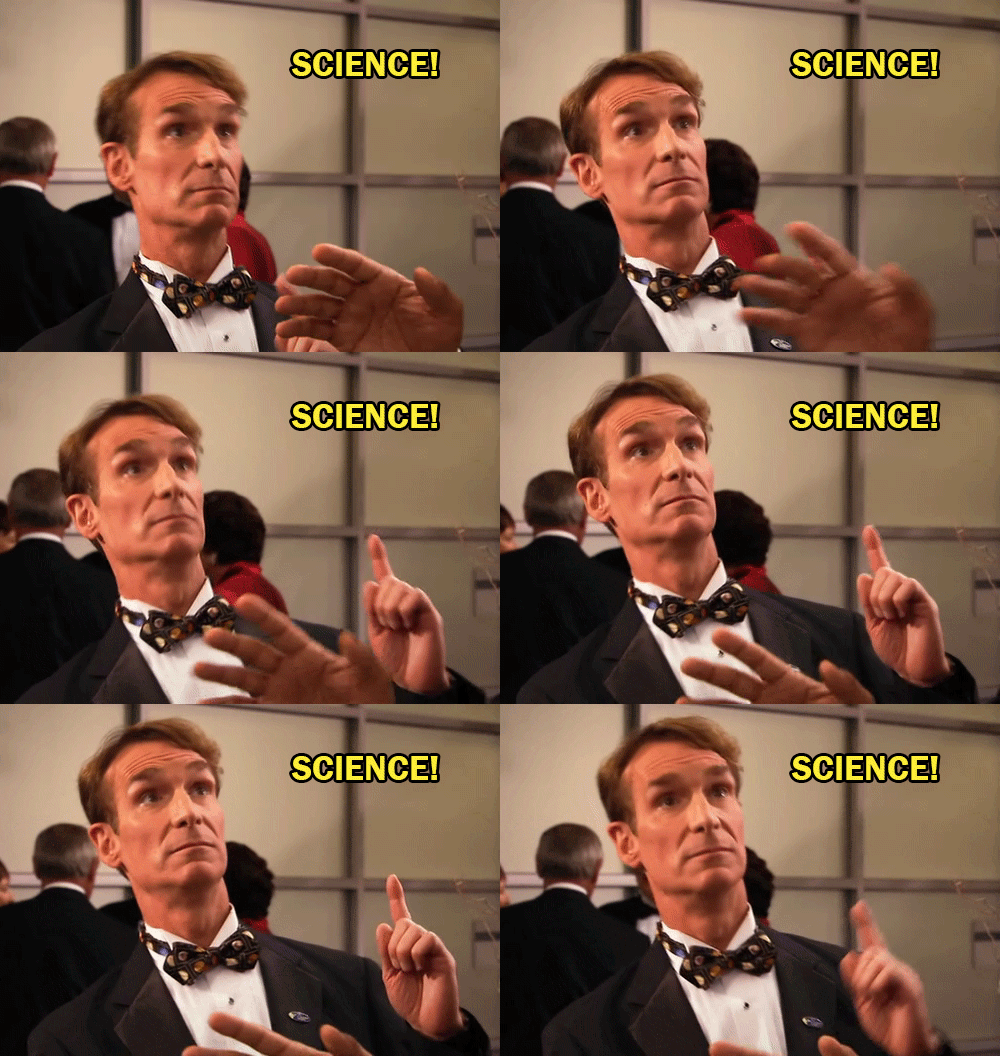

Bill Nye science
Think about it. What good is your mind-blowing experiment on flippy-whatsit isotopes in radioactive sea otters if you cannot clearly relay your process and findings to other scientists? How are you going to inform the public about it if you cannot put it into language the average man or woman could understand?


To be a good scientist, you don't have to be a good dancer, but you do have to be a good writer.

Lab reports--guess what? They are made of writing. Bring your lab report into the writing center so we can talk about structure (there is a proper and expected structure for these things), clarity, and grammar issues. And don’t worry about the fact that the tutor you sit down with may no NOTHING about nuclear physics or the anatomy of the endangered Hawaiian Crow. As it turns out, we can help you with the writing anyway! In fact, we will actually be able to have a more honest and engaging conversation because we’ll have to ask you things like, “Is this a term most people in your field know, or should you define it here?”

All that to say, please don’t feel excluded from the MWC because you’re in a hard sciences major. We would love to see you.

(We also have several tutors who are hard sciences majors, if that sweetens the deal for you at all.)

Cheers,

Gabby

Wednesday, September 11, 2013

What can Miley Cyrus' VMA performance teach us about comma rules?

Absolutely nothing. But her song "We Can't Stop" does invite us to consider the effect of sentence structure on an audience. Take these lyrics, for example:

This is our house
This is our rules

And we can't stop
And we won't stop


Can't you see it's we who own the night?
Can't you see it's we who 'bout that life?


Miley uses a series of short, simple sentences with parallel structures. This strategy gets her basic point across clearly and concisely, and it contributes to the relentless rhythm of the song, especially when you factor in the fact that all her words are only one syllable long. Furthermore, the rhetorical questions at the end invite the audience to engage with the song by addressing them directly.

Her choppy sentence structures works well, but only in her particular context (2013 pop music). If Miley were turning these lyrics in as part of, say, her literary analysis of Hamlet for Comp 1000, I would encourage her to vary and lengthen her sentence structures. I would also challenge her to not reuse the same words over and over again because it signals a lack of effort and can be annoying to read. (Get creative, hypothetical Miley!) I would also kindly remind her that contractions (can't, won't, it's, and 'bout) do not belong in academic papers. Academic papers should be professional, and contractions are casual.

So thanks, Miley, not just for searing bear images into our minds we wish we could forget, but for reminding us how important it is to be aware of audience and context when we write.


Cheers,

Gabby