Wednesday, February 26, 2014

The Writing Dead: How to Bring Your Grammar Back to Life

The Writing Dead: How to Bring Your Grammar Back to Life

If you’re anything like me, the return of AMC’s “The Walking Dead” has you preparing for the imminent zombie apocalypse. While the prospect of battling walkers for survival is both exciting and terrifying, there is another danger lurking about Auburn to prepare for: writing assignments. Here are a few tips for dealing with the scariest grammar issues.


1. The Comma Splice

This may seem like a daunting term, but it is really quite simple. A comma splice occurs when you use a comma to separate two statements that could stand on their own. Let’s look at an example.


“Rick didn’t reinforce the fence soon enough, walkers pushed it down.”


Much like the fence, a comma simply isn’t strong enough to separate these statements. There are a few ways to solve this problem. You can replace the comma with a period or a semi-colon, or you can add a conjunction. For example:


“Rick didn’t reinforce the fence soon enough, so walkers pushed it down.”

Or

Since Rick didn’t reinforce the fence soon enough, walkers pushed it down.”

If you feel you are in danger of using a comma splice, try looking at the statements on each side of the comma; if they can function as full sentences on their own, a comma is not enough to separate them.


2. The Dangling Modifier

From “The Walking Dead,” we know that dangling arms, jaws, and legs can be horrifying and gross. So can dangling modifiers. A dangling modifier occurs when you use a word or phrase to describe something, but do not name the subject you are describing. For example,
“Having killed all the walkers with her sword, the building could be entered.”
The problem here is that we don’t know who killed the walkers. In fact, the way this sentence is set up we would think that the building killed the walkers, and that makes no sense. How can we fix this? We need to name the subject that did the action. So, we can say,
“Having killed all the walkers with her sword, Michonne could enter the building”
Or
“After Michonne killed all the walkers with her sword, the building could be entered.”
The important thing to remember is that any time an action is performed, the sentence needs to clearly indicate who or what is doing that action.


3. The Misunderstood Semicolon

Just like Rick is often afraid to let his son Carl do anything useful, many writers avoid using semicolons for fear that they will do more harm than good. Even if your semicolons have a history of wandering off into places they don’t belong, you may find that with a few guidelines they are actually quite useful. So what are semicolons good for? As mentioned above, they can be used to fix comma splices. They are particularly helpful when you have two sentences that are closely related, but could stand on their own. For example,
“Carl is no longer a child; he is strong enough to fight.”
While these two statements could be written as separate sentences, using a semicolon shows their relationship to each other. This can be a good way to vary your sentence structure.
Another way to use a semicolon is to separate lists that have commas in the individual list items. So you could write,
“The groups after the prison’s destruction are Rick, Carl, and Michonne; Beth and Daryl; Sasha, Bob, and Maggie; and Tyreese, Lizzie, Mika, and Judith.”
Now that you are armed with these grammar tips, you should feel prepared to take on even the grittiest of writing assignments. Still need help? Come see us at the Miller Writing Center!

- Molly

Monday, February 24, 2014

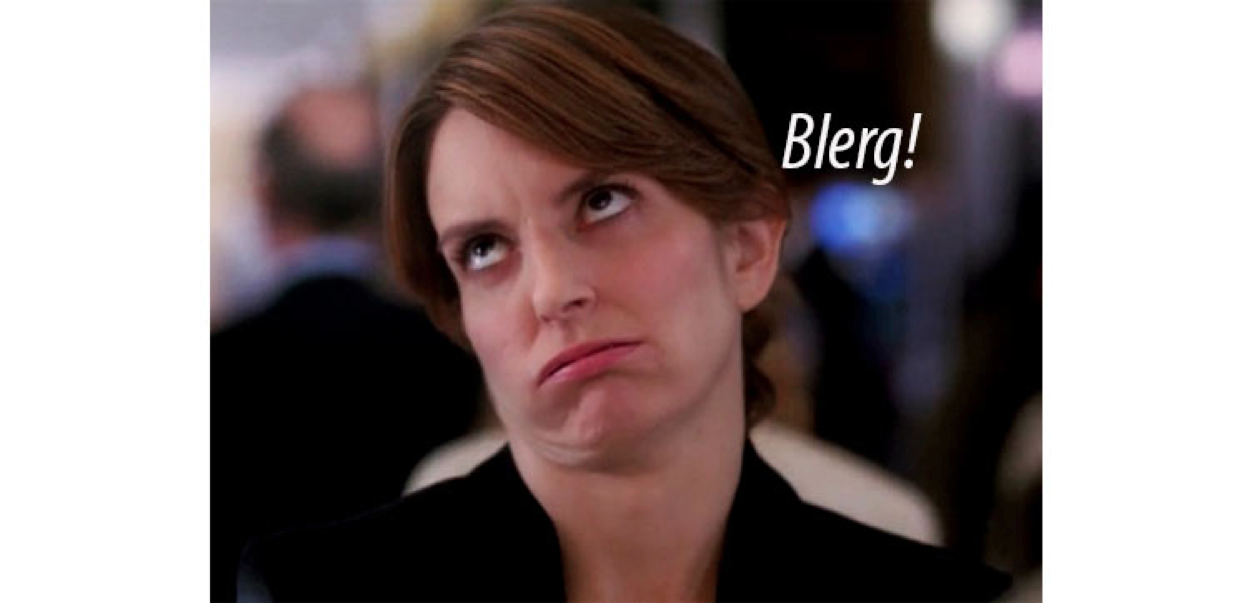
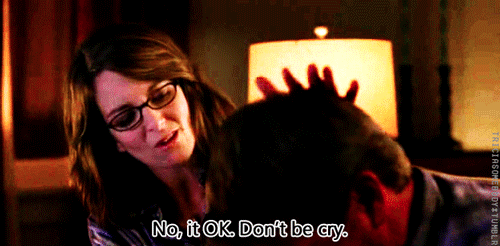
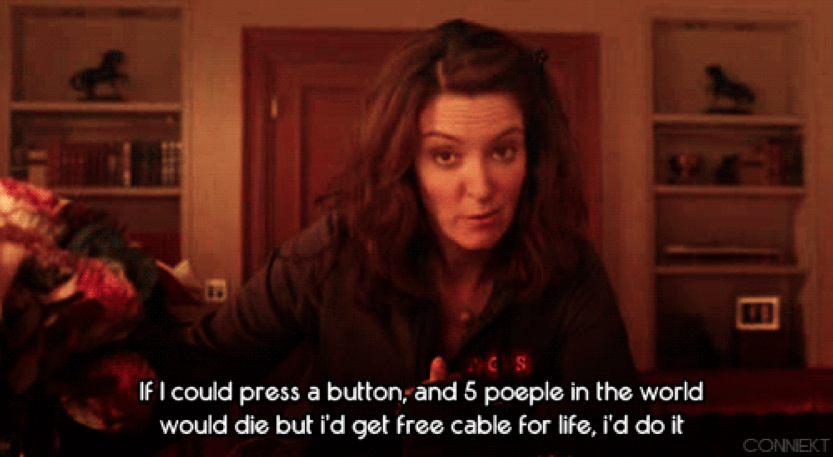
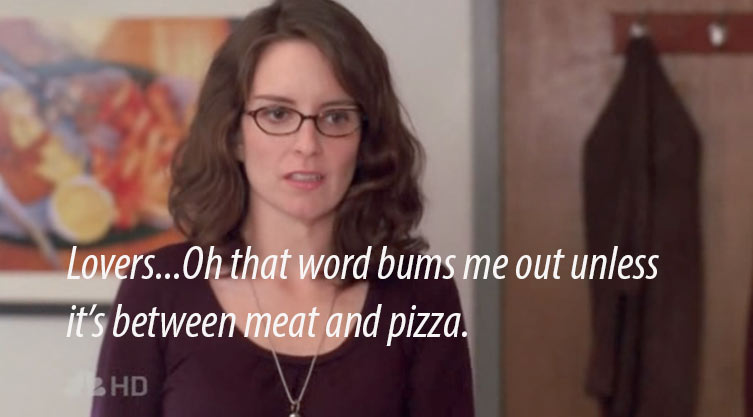
Liz Lemon’s (Somewhat) Helpful Insight About Paper Writing


Meet my good friend, Liz Lemon.


She is the former head writer for “The Girlie Show with Tracy Jordan” on NBC. She knows that sometimes writing can make us a little crazy…


..so she is here to share some wisdom with us regarding writing.


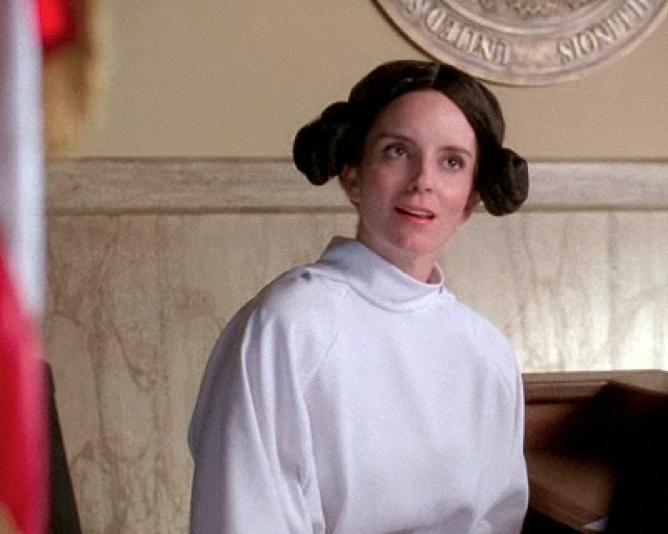
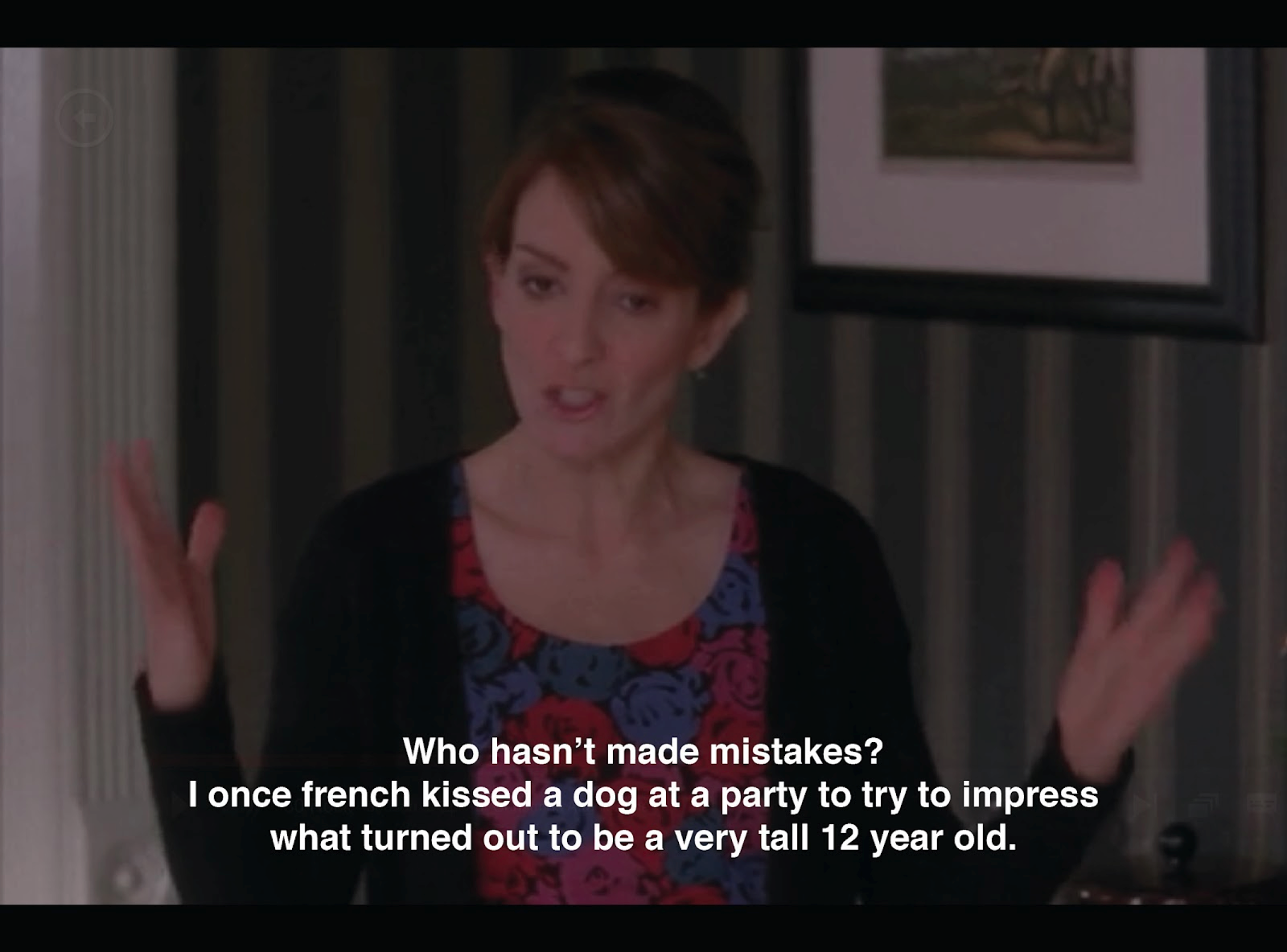
Mistakes are okay sometimes.


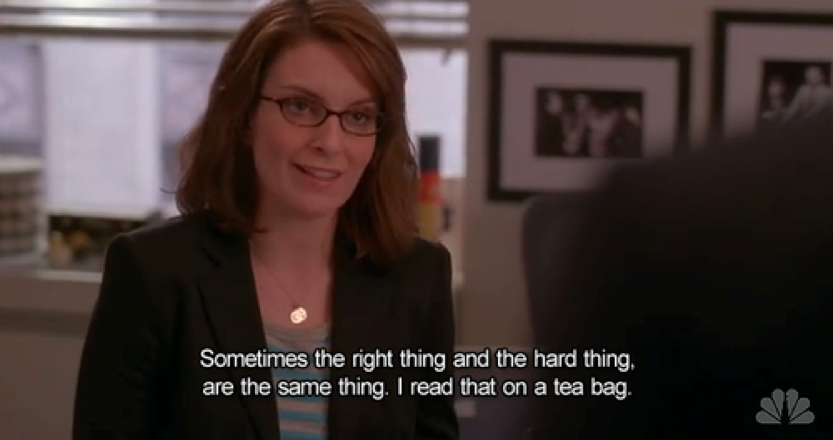
The right topic to write about might not be the easiest.


Creativity can be a good thing.*


*You probably shouldn’t use invented words in your paper.


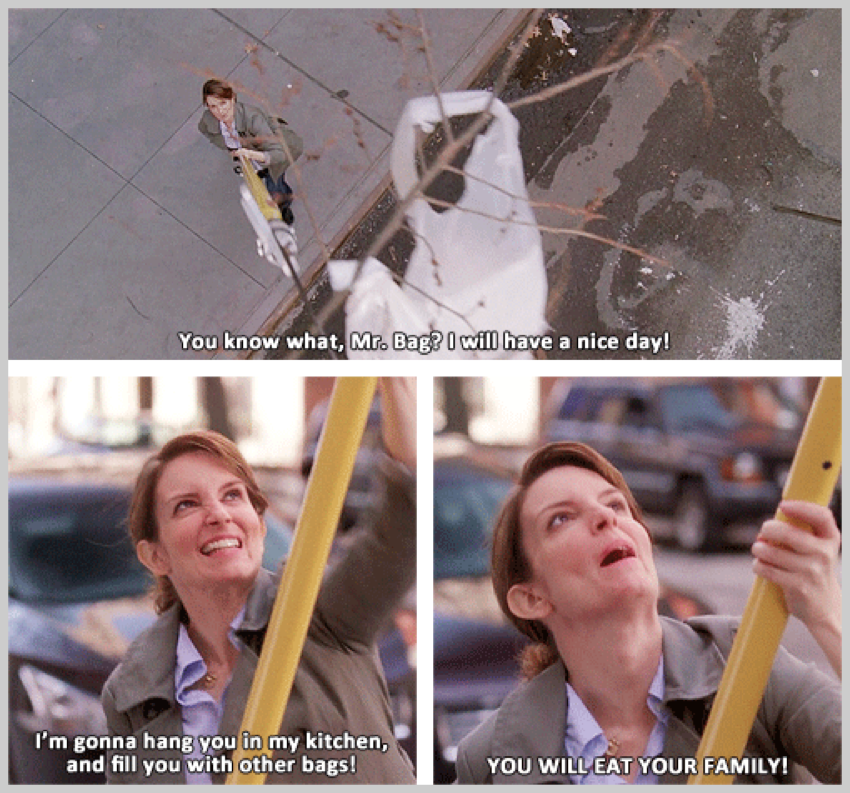
Think about the words you use before turning in your final draft.


Sometimes, honesty in writing in the best policy...


...but you should first know your audience.


Word order is important.


In order to write a successful paper, you need to use multiple elements and not just stock up on one.


Staying in to write is a good idea, especially the night before it is due.


Talking out ideas for your paper can be helpful.


Come see us at the Miller Writing Center!


-Dianna

Tuesday, February 18, 2014

Tutor Tip Tuesday: Avoiding Passive Voice


Odds are, if you’re majoring in one of the humanities, then you’ve heard one of your professors talk about writing in the passive voice.  You might have even used the passive voice in one your papers, at which point your professor might have even given you a gentle chewing out.  Personally, I can’t disagree.  I’m a historian, and we especially loathe the passive voice because it is indirect, obscure, and, for lack of a better word, so passive.  Now, before my friends who are in the sciences get too upset with me, I’ll concede that the passive voice is acceptable in some disciplines (like science and engineering).  That said, because there are different contexts where it either is or is not acceptable to use the passive voice, it is important to be able to know what it is, what it sounds like, and how to change it, if need be, to the active voice.


So, what is the passive voice?  You are using the passive voice when you construct a sentence where the subject is being acted upon, rather than being the actor.  Here are two examples:

1.       Alabama was beaten by Auburn in the Iron Bowl.


In this sentence, Alabama is the subject, and it is being acted upon by Auburn(or Chris Davis, if you wanted to be really specific).  The construction is passive because instead of Alabama beating someone, Alabama is taking a beating.  Here is another example:


2.      Abraham Lincoln was shot by John Wilkes Booth.


Again, we have a subject, Honest Abe, who is being acted upon.  Put another way the subject, Lincoln, is passive because he is being shot by Booth. [1]

Now that we know how and why this type of construction qualifies as passive, we have to ask ourselves, how do we modify them to be active?  It is actually easy in these cases.  For example:


1.      Auburn beat Alabama in the Iron Bowl.
We know, buddy. We think switching from passive to active voice is mindblowing, too.
and


2.      John Wilkes Booth shot Abraham Lincoln.


Did you really have to use that as an example?
In these cases we changed the subjects to Auburn and John Wilkes Booth, and they are now acting upon Alabama and Abraham Lincoln, respectively.   The constructions are now active, we know who is doing what to who, we’re being direct, we’re being clear, and, most importantly, we’re avoiding the passive voice.


Happy writing.

- Jake


[1] As an aside, it hurts me to have to use the passive voice to describe the passive voice.  It is what it is, though.

Friday, February 14, 2014

Happy Valentine’s Day from the Miller Writing Center!


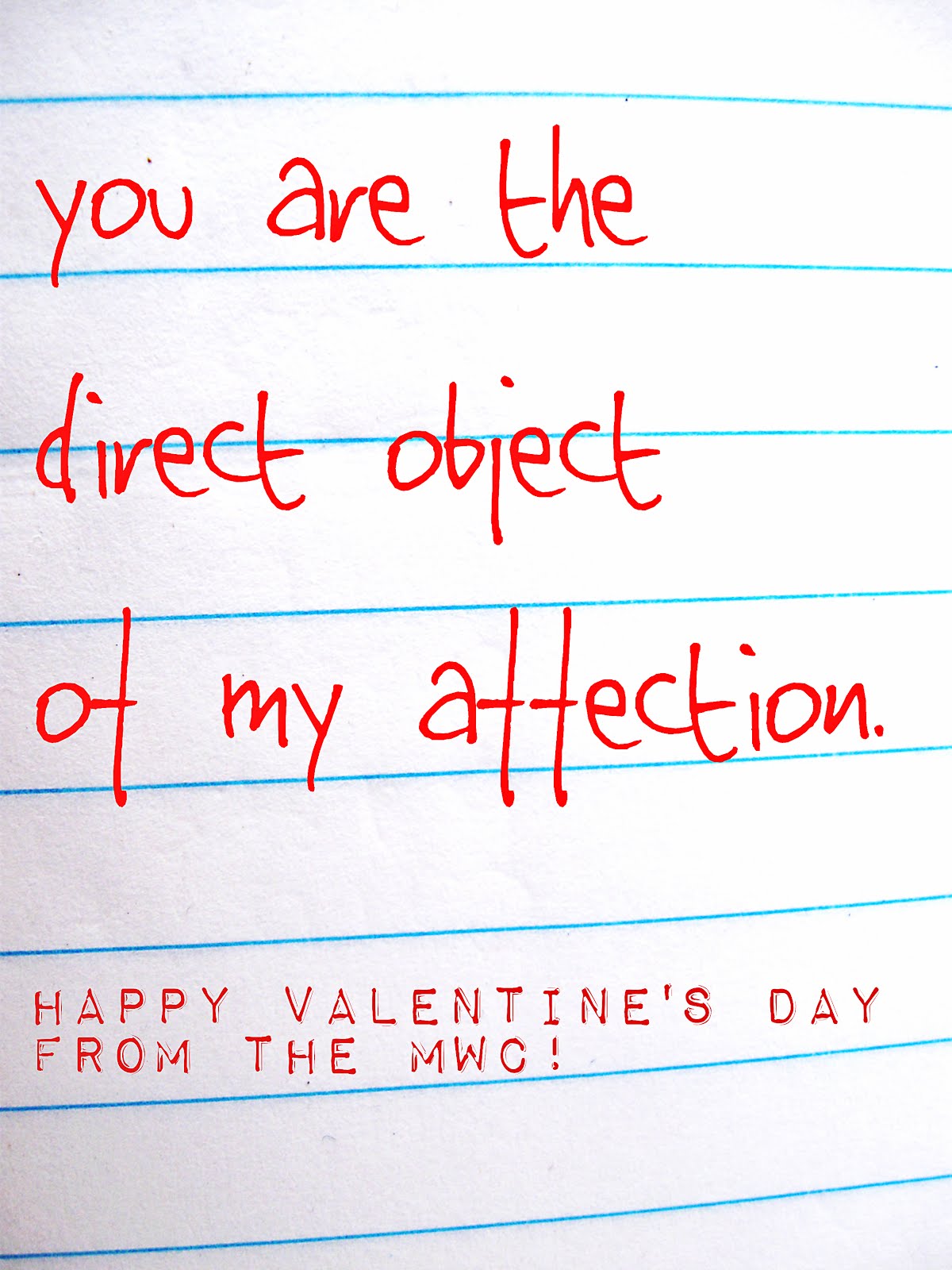
It’s Valentine’s Day, and you’re probably looking for the best way to tell your special someone that you like (or perhaps even love) them. Have no fear, the Miller Writing Center is here to help make you the most romantic person on the block! (And you thought we only worked with English Comp papers. Ha!) Our staff has created a few Valentine’s Day cards for you to share with your friends. Enjoy!


TO: Student
FROM: Carson


TO: Student
FROM: Ben

TO: Student
FROM: Molly


TO: Student
FROM: Matt


TO: Student
FROM: Scott


And for all those souls who spend Valentine’s Day huddled under their comforter with Netflix by their side,


TO: Student
FROM: Courtney


The Miller Writing Center wishes you a very Happy Valentine’s Day (and a very successful chocolate haul the day after)!


- Miller Writing Center Staff

**All stock photos retrieved from morguefile.com

Tuesday, February 11, 2014

Tutor Tip Tuesday: Capitalize Yo'self

It’s the beginning of a new year, new semester, and new you (right?). And what’s the one thing you want to do with all of these? You want to capitalize on them. And how can the Miller Writing Center help you capitalize on your capitalizing? By blogging some capitalization rules for you, and by offering free tutoring in six locations to all students, all writing. Here we’ll focus on the first of these.
  1. CAPITALIZE THE FIRST WORD OF EVERY SENTENCE.
Sorry to yell, or scream. Two important lessons from the sentence that is this rule: 
(1) Always capitalize the first word of every sentence. ALWAYS.
(2) Don’t capitalize full sentences or phrases unless you want to be read as yelling or screaming.
-You may come off as a drill sergeant. And what do you call a drill sergeant with a voluntary audience?*

  *Lonely
  1. Titles
Style guides offer myriad advice about capitalizing titles, so here are helpful tidbits:
(1) Listen to the rules of the style guide your teacher suggests (MLA, APA, etc.)
(2) If there is no advised style guide, capitalizing all words except prepositions, articles, and conjunctions (unless they begin the title or subtitle) is your safest bet.
Examples:
Text Appeal: The Hottest Books of the 21st Century
On Who Is Perhaps the Last Superhero (or Villain): Iron Knee
#BonusFactoidHint: italicize book titles
(3) Be consistent. Be consistent. Be consistent. Nuff said. (Well, but don’t be redundant.)


  1. Capitalization in Quotation Marks


Preliminary remark: When quoting material, don’t change the original capitalization.
When beginning dialogue or a quotation that requires a preliminary comma, capitalize the first letter of the first word said or quoted, but when a quote does not follow a comma, don’t capitalize it.
Examples:
He said, “Why, I sure love the grammar.”
The text states, “He enjoyed wearing frothy socks.”
I read that “fourteen women on one road” are actually “fourteen women on fourteen roads.”

Well, that’s all the help we can give for now. Any further capitalization is in your own hands, or at least under your shift key (regarding Caps Lock, see rule 1). So, remember these three rules, put them into practice, and, being the clever writer you are (yes, you are), capitalize yo’self.


- Carson


Monday, February 3, 2014

Meet the Staff Monday: Jake Clawson


Consultant: Jake Clawson


Major:  PhD in History

Year: 3rd year

What do you like doing best in your spare time?  
I ran college cross country and track when I was an undergraduate, so I still enjoy going out and running every day.

What’s the best advice anyone has ever given you about writing?
The first thing that comes to mind is Hemingway’s line about “the first draft of anything,” but that’s probably a little too crass for the blog.  So, I’ll go with the second best piece of writing advice anyone has ever given me.  I had turned in a book review for a class during my first semester of graduate school, and next to my summary of the author’s argument my professor wrote, “Get to the point.”  It was the best advice I’ve ever gotten because it was so blunt that I’ll never forget it, and because I think being clear and concise are the marks of a good writer (at least for writing history).

What has been the most rewarding part of your job at the Miller Writing Center?  
I’ve really enjoyed getting to work with writers from a variety of disciplines.  Obviously, I’ve worked with a lot of the freshmen in the composition classes, and that’s been fun.  Also, though, I’ve enjoyed working with other graduate students who are in disciplines much different from my own, like business and science.  I learn something new every time, and I get to talk to other people about how they go through the writing process.

Is there anything challenging about your job? If so, what is it?
Working with science writing.  I can’t get used to passive voice

Hidden talent?
I can touch my nose with my tongue.  Does that count?
(Staff response: That definitely counts.)

Any good book recommendations?   
Right now I’m reading Edmund Morgan’s American Slavery, American Freedom:  The Ordeal of Colonial Virginia.  Morgan addresses the salient paradox of early American history, specifically, how colonial Virginians could be so insistent on maintaining their liberties and freedom as Englishmen while also basing their society on African slavery.  Morgan has a keen eye for historical analysis, and he’s a great writer.  Although I’m a Civil War historian, it’s probably the most important book written about American history in the past 50 years.

You can work with Jake in our Athletics location of the Writing Center on Monday from 5-9PM, Tuesdays from 5-6PM, and Wednesdays from 5-7PM!