Wednesday, April 2, 2014

Tutor Week: Meet Morgan


You've made it halfway through the week! Take a break and meet another one of our delightful tutors, Morgan


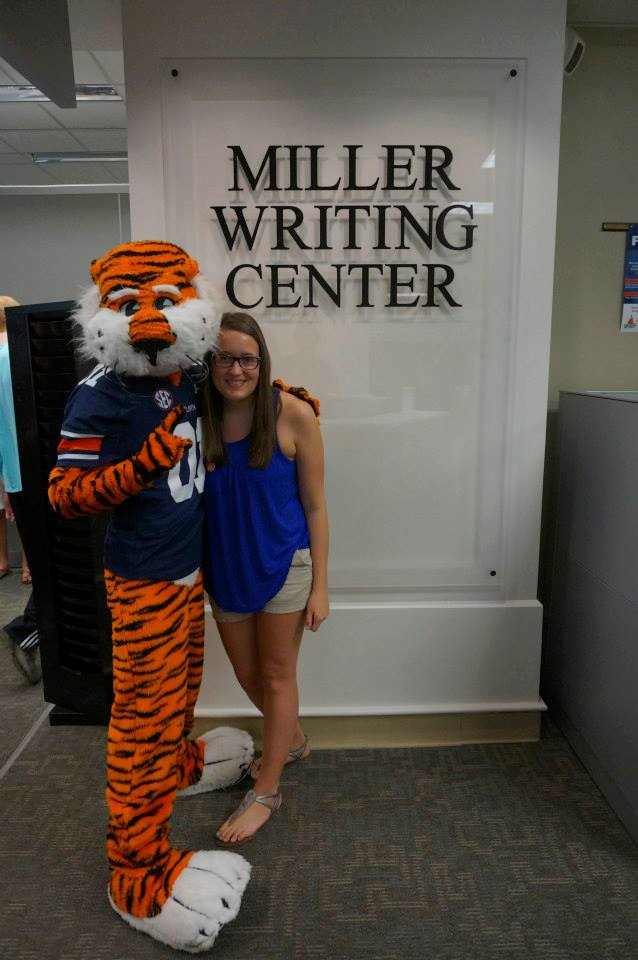
Name: Morgan McVay
Major: Public Relations with a minor in Spanish
Year: Junior​
What do you like doing best in your spare time?
I love to do anything outside, especially if it involves being in the water and the sunshine. I also enjoy reading, painting and traveling.

What’s the best advice anyone has ever given you about writing?
"If you're running out of things to say, quit writing" or "write tight." We've been taught to "fluff" our papers to make our writing longer, but if you're having to think of something else to say, your readers are probably getting bored.

What has been the most rewarding part of your job at the Miller Writing Center?
Working with the same writer over time and seeing how much they improve their writing ability from paper to paper. I love when they pick out mistakes that we've covered before I do!

Is there anything challenging about your job in the Writing Center? If so, what is it?
I think the most challenging thing is having to tell someone that their paper doesn't match the given assignment. I know they've put so much work into it, but I would rather tell them so they can fix it before turning it in.

When and where do you work at the MWC?:
Monday in RBD 3-6PM
Tuesday in RBD 4-7PM
Wednesday in the LRC 10AM-12PM

If you had a super power that you could only use in the Writing Center, what would it be and why?
The power to warm myself up. The LRC is always freezing!
More seriously though: the power to read faster. I'm a pretty slow reader, so I could probably get a lot more done in the appointment time if I could read faster.


Any good music recommendations?

I love country music, but I downloaded the Haim album recently and I can't stop listening to it.

Tuesday, April 1, 2014

Tutor Week: Meet Murali

Continuing our Tutor Week festivities, we sat down with the hilarious Murali to get to know a little more about him! 

Name: Murali Dharan

Major: Electrical & Computer Engineering
Year: Every year
What do you like doing best in your spare time?
Free time?? I'm a graduate student in Engineering, I signed away all my free time to Beezelbub in the vain hope for a real career but if by a stroke of good fortune, I get an hour or two between sustenance and slumber, I play video games, catch up on TV shows, or just offer snide remarks when hanging out with friends.
What’s the best advice anyone has ever given you about writing?
Don't use 7 words when 4 words will suffice.
What has been the most rewarding part of your job at the Miller Writing Center?
You mean apart from Cha-Ching? Well then, I guess it would have to be access to the disparate thinking of our vastly diverse clientele and the kind of writing I get to read and help people improve. I love to learn about new stuff and this keeps me on my toes with the volume of stuff I get to read and learn which I would've never read on my own.
 Is there anything challenging about your job in the Writing Center? If so, what is it?
Working with rhetorical and literary analysis papers. As an engineer, I am used to writing an objective conclusion based on solid facts and figures not one based on feelings and inferences where it can change depending upon the viewpoint. A couple of times during my initial days, I have accidentally skewered my client's papers trying to understand the point and objective of their paper. I have learned very quickly from those transgressions and have ensured it doesn't happen again.
When and where do you work at the MWC?
Tuesdays and Wednesdays at Athletics
Hidden talent?
A penchant for double entendres and an innate ability to find humor in any situation however awkward it might be.
Any good book recommendations? 
The Hitchhiker's Guide to the Galaxy

Monday, March 31, 2014

Tutor Week: Meet Dianna!

It's Tutor Week at the Miller Writing Center, and we're showcasing some of the awesome members of our staff all week. To kick things off, we're interviewing one of our stellar lead consultants, Dianna

Name: Dianna Tingle
dianna.png
Major: Communication Disorders (soon to be a doctoral candidate in Audiology!)
Year: Senior/Future Graduate Student
What do you like doing best in your spare time?
If I have a lot of free time, reading is my spare time activity of choice. If I’m busy and just need a mental break, Netflix is my go-to. I also enjoy playing volleyball any chance I get.
What’s the best advice anyone has ever given you about writing?
“Write crappy rough drafts.” Seriously, before someone told me this, I focused on perfection with every sentence I wrote.  Now I get all of my ideas out on paper and write multiple drafts. It has changed my writing process and actually sped it up.
What has been the most rewarding part of your job at the Miller Writing Center?
I have enjoyed getting to know my clients over the years. I love learning from their thoughts, ideas, and papers. Everyone who comes into the writing center comes from a different background and major, so I get to learn something new every single day. My range of general knowledge is so much greater now because I get to read about so many topics from week to week. My clients also keep me updated on other important life things; for instance, do you know there is a really awesome Canvas app for iPhones? I didn’t until a client told me about it.
Is there anything challenging about your job in the Writing Center? If so, what is it?
I also struggle when reading chemistry papers, especially dissertations. I don’t know what it is about chemistry, but I have a hard time reading through all of the formulas and symbols.
When and where do you work at the MWC?:
I work on Tuesday and Thursday mornings from 9-11 in Multicultural and 2-4 on Tuesdays in RBD.
Hidden talent?
I can pogo with no hands.
Book recommendation:
If you haven’t read The Fault in Our Stars by John Green, get on Amazon Prime right now and order it.

Tuesday, March 25, 2014

Surviving Graduate School Applications: The Personal Statement

http://sciencepreps.iupui.edu/sites/default/files/personal_statements-13.png

For any student who is applying to graduate school, the personal statement is a seemingly small yet scary portion of the application process.


Have no fear! The writing center gang and I are here to help you through stressful times such as these. Below is a list of a few do’s, don’ts, and tips to help you whether you’re just starting out or you’re suffering from a terrible case of writer’s block.


Do’s & Don’ts
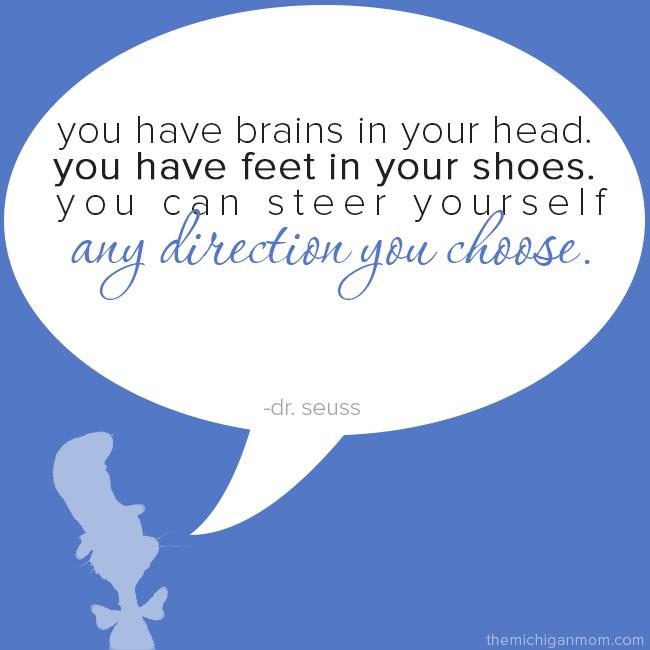
http://themichiganmom.com/wp-content/uploads/2014/02/dr-seuss-quotes-21.jpg
Begin your statement with a quote from your favorite author.
Don’t!
Can this approach work? Indeed, it has and it may. Is it necessary? Not at all. That Dr. Seuss quote may seem endearing, but it’s not original. Also, avoid the cliché “I’ve wanted to be a (fill in the blank) since I was a child.” There are other ways to convey your commitment to the field of your choice.
Do!
Start out with an experience that is relevant to the field you plan on entering. Use volunteer, research, and/or leadership experience you have. This will make for a great tie-in when you tell the admissions committee what you plan to do with your fancy graduate degree.


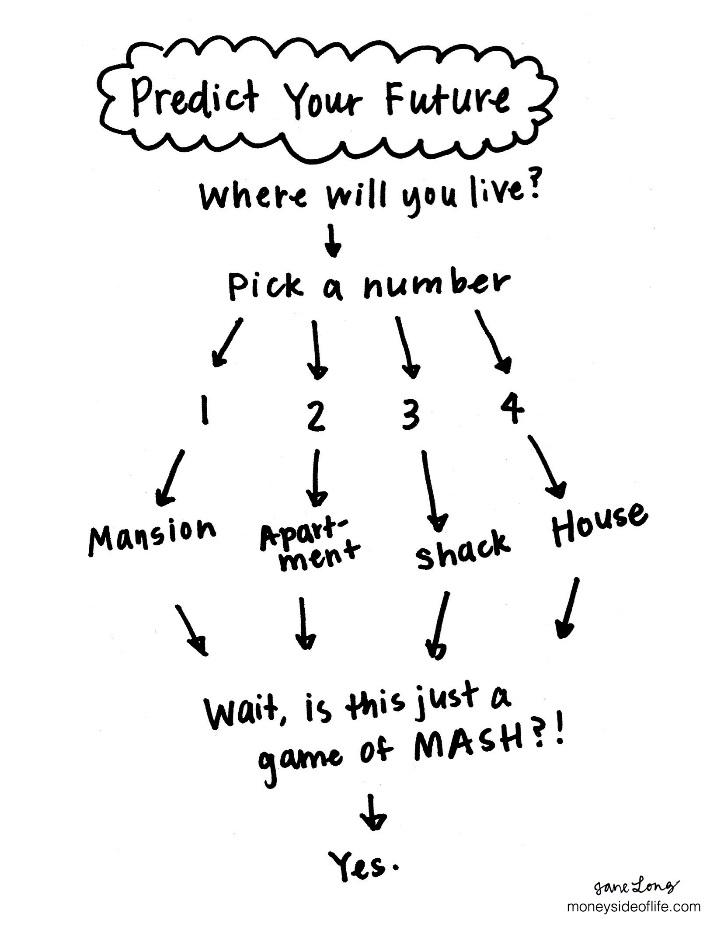
http://www.moneysideoflife.com/wp/wp-content/uploads/2012/05/future2.jpg
Give a detailed view of your future.
Don’t!
Well, not entirely. Asking someone to write a detailed plan of their future is pretty cruel. Some of you may know exactly where you want to work and where your life is headed. I tip my hat to the spectacular individuals who do. For many others, however, the thought of giving a detailed account of the future is terrifying.
Remember, the personal statement is 1-2 pages; you’re not writing a novel. You’re not expected to have a play-by-play of your next 10 years, but you have to remember that you are applying for graduate study for a reason.
Do!
Help the graduate admissions committee help you! Think about the job you aspire to have someday. Use this dream job to tell the admissions committee how their program will help you obtain that job. This is not a binding contract. Your graduate studies may open your eyes to another job opportunity, but you have to have some direction for what you’d like to do after graduating.http://questcareurgent.com/wp-content/uploads/2012/02/3339first_aid_kit.jpeg
Tips:
If you’re having issues getting started, look at the website for the school and department you are applying to. Ask yourself:
Why do I want to join this program? – There must be a reason why you’re interested in their school/program.
What does this school/program have to offer me? – Many applicants concern themselves with whether they are good enough for the school. It’s more important for you to consider whether the school/program is good enough for you!
Is there a specific field of research or a professor that I want to work with? – This requires you to do some research. It’s good to drop names and show the admissions committee that you have done your homework. Also, if you’re applying to multiple schools, knowing what each school/program has to offer will help you tailor each letter.
What resources are available to me? – Your best resource is always the school/program you are applying to. Try to make contacts with professors and advisors in the department you’re interested in early on. Also, AU Career Services has a handy tip sheet that can be found here.
Lastly, it may help you to think of the graduate school application as a job application. After all, being a full-time student is a real occupation.


Hopefully, these tools will help you as you work on your personal statement(s). If you need further guidance, feel free to make an appointment at The Miller Writing Center at a location nearest you!


Best of luck,
Elizabeth D.

Friday, March 21, 2014

Foreign Language Friday: Fun with Idioms!

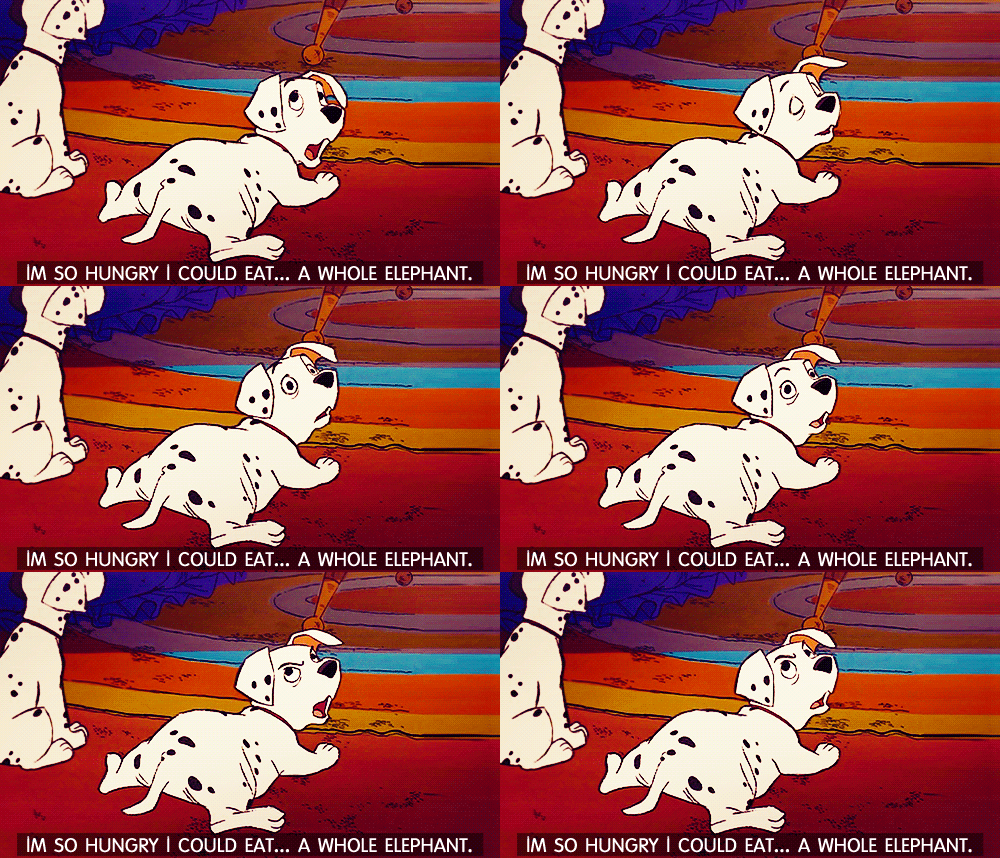
Working as a tutor at the Miller Writing Center, I have experienced a fair share of the English language’s peculiarities first hand. Why can’t we start sentences with ‘but,’ but can start sentences with ‘however,’ if they mean the same thing? Why is through spelled with a ‘g’? How do you know when to use ‘the’ versus ‘a’ or no article at all?

           I’m not going to talk about any of these English quirks today, however. Rather I’m going to discuss a phenomenon that can be problematic for learners of any language: the idiomatic expression.

tumblr_ln7qt0Trds1qeyu8fo1_500.gif

The above are all expressions we hear often in spoken English, but have you ever cracked open your textbook and seen one, or read such a phrase in an academic dissertation? The problem with using idiomatic expressions in more formal writing is simple: idiomatic expressions don’t actually make that much sense anymore. They might have started off with a hysterical backstory, but most of those are forgotten today; to anyone who hears them for the first time, idioms are only a ridiculous string of words. Take a few examples in German, French, and Chinese, with their literal translations and English equivalents. If you read or heard only the literal words, you would probably be scratching your head. 

French:

- Casser les pieds à quelqu'un – to break someone’s feet // to get on someone’s nerves
- Coûter les yeux de la tête – to cost the eyes from your head // to cost an arm and a leg
- Revenons à nos moutons – let’s come back to our sheep // let’s return to the real issue or subject here
- Trempé comme une soupe – to be soaked like soup // to be drenched
- Parler francais comme une vache espagnole – to speak French like a Spanish cow // to speak French poorly
- faire passer le goût du pain à quelqu'un – to take away the taste of bread from someone // to take someone out, to kill or assassinate someone

How about German?:
- Alles hat ein Ende, nur die Wurst hat zwei – Everthing has an end, only sausage has two // All things come to an end.
- Wo sich Hase und Fuchs gute Nacht sagen – where the hare and the fox say goodnight // out in the middle of nowhere
- Das Ei will kluger als die Henne sein. – The eggs wants to be smarter than the hen. // Younger generations think they’re smarter than their elders, or you’re trying teach your grandmother to suck eggs.
- eine Leiche im Keller haben – to have a corpse in the basement // to have a skeleton in the closet
- weder Hand noch Fuß haben – to have neither hand nor foot // to make no sense
- Man kann nicht auf zwei Hochzeiten tanzen. – You can’t dance at two weddings. // You can’t be in two places at once. You can’t have your cake and eat it, too.

And some Chinese proverbs?:
- 三个和尚擔水無粥食。Sān gè héshàng dān shuǐ wú zhōu shí. – 3 monks fetching water results in no rice gruel or porridge. // Too many cooks spoil the broth.
- 老婆是別人的靚. Lǎopó shì biérén de liàng。- Someone else’s wife is prettier. // The grass is greener on the other side.
-虎父 虎子. Hǔ fù hǔ zi. – Tiger father, tiger cub. // A chip off the old block, or the apple doesn’t fall far from the tree.
-无风不起浪. Wú fēng bù qǐ làng. – Without wind, you cannot have a wave. // Where there’s smoke, there’s fire, or everything has a cause.
-忠言逆耳,良藥苦口. Zhōngyánnì'ěr, liángyào kǔkǒu. – Loyal speech sounds like the inverse to the ear, and good medicine tastes bitter. // Things that are good for us don’t always appear that way.
-五十步笑百步. Wǔshí bù xiào bǎi bù. - The soldier who retreated 50 steps laughs at the one who retreated 100 steps. // The pot calls the kettle black.

           So now that we’ve looked at some idiomatic expressions from other languages and the hilarity that ensues from trying to translate them, you can hopefully better understand why such nonsensical phrases don’t have a proper place in your literary analysis, lab report, or master’s thesis! Next time you’re about to write that you think the author included too much foreboding about such and such character biting the dust, or that your lab procedure was a piece of cake, maybe think of a clearer way to express your ideas. And don’t ever admit to your professor that you finished the paper before the deadline only by the skin of your teeth!

Sources that helped me make sure my translations, pinyin marks, and characters were correct and provided the images:
http://french.about.com/od/expressions/
http://german.about.com/library/blredew_H.htm
http://wenku.baidu.com/view/0e07f063ddccda38376baf2d.html
http://www.chinese-tools.com/chinese/proverbs/02.html
icanhas.cheezburger.com
disneyclassicdisney.tumblr.com


- Courtney

Tuesday, March 18, 2014

Crossing the Streams: Confronting the Fear of Writing


GhostbustersdefeatingGozer.jpg


In the mid-1980s science-fiction film “Ghostbusters,” the heroes receive a warning from one of their own. In the ensuing exchange, Dr. Egon Spengler, played by the recently late Harold Ramis, reveals the consequences of “crossing the streams,” or combining the ghost-battling energy their blasters emit: “Try to imagine all life as you know it stopping instantaneously and every molecule in your body exploding at the speed of light.”

As Dr. Peter Venkman, portrayed by Bill Murray, summarizes: “Right. That’s bad. Okay. All right. Important safety tip. Thanks, Egon.”

In writing, and many other life pursuits, fear is an ever-present, yet unwelcome companion. It can be a critical motivator. It can also be a crippling nuisance. The knowledge that something is uncomfortable or for which we feel ill-equipped can seem like the notion of stream-crossing. Not knowing what is on the other side of anything we choose to attempt can keep us from trying it at all. What little we are aware of about something, such as Spengler’s 23-word pronouncement of doom, just adds another chain of restraint.
Combine with this informed feeling of dread the fact someone assigned the activity can make it seem even more daunting.

For some, the idea of viewing a writing assignment as a good thing is like a person being giddy about a root canal, or an invasive, hours-long surgical procedure. Underpinning this severe lack of enthusiasm could be multiple influences. These include – a bad experience in high school or elsewhere in college; never hearing positive feedback about writing (or anything else, for that matter);  or a perception that writing is impossibly hard.
Here’s the big reveal for this post. Ready?
All writers – from beginners to veterans – face fear.
For those just starting out, it can be the uncertainty of knowing where to start and how to phrase things, or making a mess of their work product. For the experienced, it can be the fear of trying a new technical approach, such as a creative introduction or a bending of certain rules or taking a huge topical risk.
Risk of disappointing an audience runs throughout the continuum of writers.
So, how can writers overcome these trepidations? The simple answer is by doing it, though the path forward is more complex.
Regardless of where a writer falls on the experience scale, he or she can follow these essential steps:

Brainstorm through free-writing. If a writer finds himself or herself wondering if he or she will lose a staring match with a blank page, a good way to overcome this is to take a few minutes (timing oneself is okay) and literally write down every thought. It’s okay if it’s embarrassing, or rude, or otherwise unsettling. This is not the end result. If needed, it’s perfectly fine to delete the “scratch” document or rip up the sheet of paper once the brainstorming is complete and the resulting, relevant thoughts are on a draft page.

Start writing. Get words on the page. Going back to revise is quite acceptable. The first draft may not even remotely resemble the end product, but the longer one waits to get going, the greater the likelihood that the writing piece might not be the best it could be, or that it may not get written at all.
Read aloud. While this may not work for everyone, those who are familiar with how the English language sounds when it is spoken can be a great tool to catch mistakes, or observe ways to improve the writing.

Get another pair of eyes. Take the opportunity to get a roommate, friend, relative, or classmate to read the document also. At the Miller Writing Center, our writing consultants are well-equipped to help with all of these steps and more. We work with all Auburn students at every stage of writing, from processing initial ideas to taking a last look before the work is turned in, sent off, published, or otherwise complete.

Toward the conclusion of “Ghostbusters,” Spengler decides that the best way to move forward in their situation is to cross the streams. Venkman responds that this could endanger the team and others. “Not necessarily. There’s definitely a very slim chance we’ll survive,” Spengler says in reply.


Not to give away the ending for those who haven’t seen it, but the guys do live through the experience. And for those of us who see writing the same as crossing the streams, we will too.

- Paul

Friday, March 7, 2014

From Page to Screen: Books to Read Over Spring Break


I don’t know if you had to read Stephen King’s On Writing: A Memoir of Craft in high school, but I did. (Confession: I loved it.) In it, he makes it clear that reading and writing skills correlate. As King says in On Writing, “If you want to be a writer, you must do two things above all others: read a lot and write a lot.”

I know Spring Break’s next week, and you’re thinking, “Pleeeassse, no more books. All I want to do is sleep, party, and watch Netflix.” I get that.  But it’s kind of difficult to watch Netflix movies on the beach. So, when you’re taking a writing break during Spring Break next week, try reading one of these soon to be movies:

Divergent by Veronica Roth
(March 21)


“What’s the next Hunger Games?” you ask. Some people have their money on Divergent.


So, What’s It About? Divergent takes place in a dystopian civilization made up of five factions based on different virtues, like bravery and intelligence. It follows the life of sixteen-year-old Beatrice “Tris” Prior, who must choose one of the factions. During her initiation, she discovers a secret about herself, love, and tensions between the factions that might crumble the society.
 

Why Do I Like It? It’s fast-paced and doesn’t follow the dystopian YA love formula, which means there’s no love triangle.
 
Key Actors: Shailene Woodley, Theo James, Kate Winslet, and Ansel Elgort


The Fault in Our Stars by John Green
(June 6)


Warning: Keep tissues close.


So, What’s It About? Hazel has cancer, but she says this is not a “cancer book.” When Augustus Waters walks into her life, she learns that she can be more than a grenade--that she can make friends and find love and happiness in short infinities.

Why Do I Like It? John Green’s writing rocks, and his characters are insanely witty.

Key Actors: Shailene Woodley and Ansel Elgort


Gone Girl by Gillian Flynn
(October 3)

This book might be the definition of page-turner.


Photo found at imbd.com


So, What’s It About? Nick Dunne comes home to find his missing wife’s supposed murder scene--and he’s the main suspect. His reactions cause his friends to question his mental stability, but after reading passages from his perspective and from his wife’s diary, you’ll question who the crazy one really is.

Why Do I Like It? It’s told from alternating viewpoints, and the twists, guys… The twists.


Key Actors: Ben Affleck, Rosamund Pike, and Neil Patrick Harris


Happy reading!


-Haley P.